

Custom Homes · July 2026 · 11 min read
If you’re building or renovating a luxury home in Toronto, you’ve likely considered smart home green technology Toronto as a way to reduce your carbon footprint and monthly utility bills. But here’s the truth: most homeowners I meet assume that “smart” and “green” are separate add-ons—something you bolt onto a finished house. That’s a costly mistake.
Over the past decade, I’ve overseen dozens of custom home projects across Rosedale, Forest Hill, and the Beaches. The ones that deliver genuine energy savings and lasting comfort aren’t the ones with the most gadgets. They’re the ones where smart home green technology Toronto is integrated from the first architectural sketch. This isn’t about turning lights on with your phone. It’s about designing a home that thinks—and saves—on its own.
Toronto’s climate is brutal on energy budgets. We get humid summers that demand air conditioning, freezing winters that strain furnaces, and shoulder seasons where heating and cooling systems fight each other. The average detached home in the GTA consumes about 30,000 kWh of electricity annually. A well-designed smart home can cut that by 20–40 percent. That’s not a guess—it’s what I’ve measured in our own projects.
But why does “smart” matter for green living? Because energy waste isn’t caused by bad equipment; it’s caused by how we use it. A high-efficiency furnace still burns gas if you leave the thermostat at 24°C while you’re on vacation. Smart systems eliminate that waste by learning your habits, responding to weather, and automating adjustments you’d never remember to make.
For Toronto homeowners, this means lower hydro bills, fewer carbon emissions, and a home that feels comfortable year-round. And when you sell, a smart-green home commands a premium—typically 5–10 percent more than a conventional luxury property, according to my own market observations.
Let’s get specific. Not all smart devices are created equal. In my experience, three systems deliver the highest return on investment for green living in Toronto.
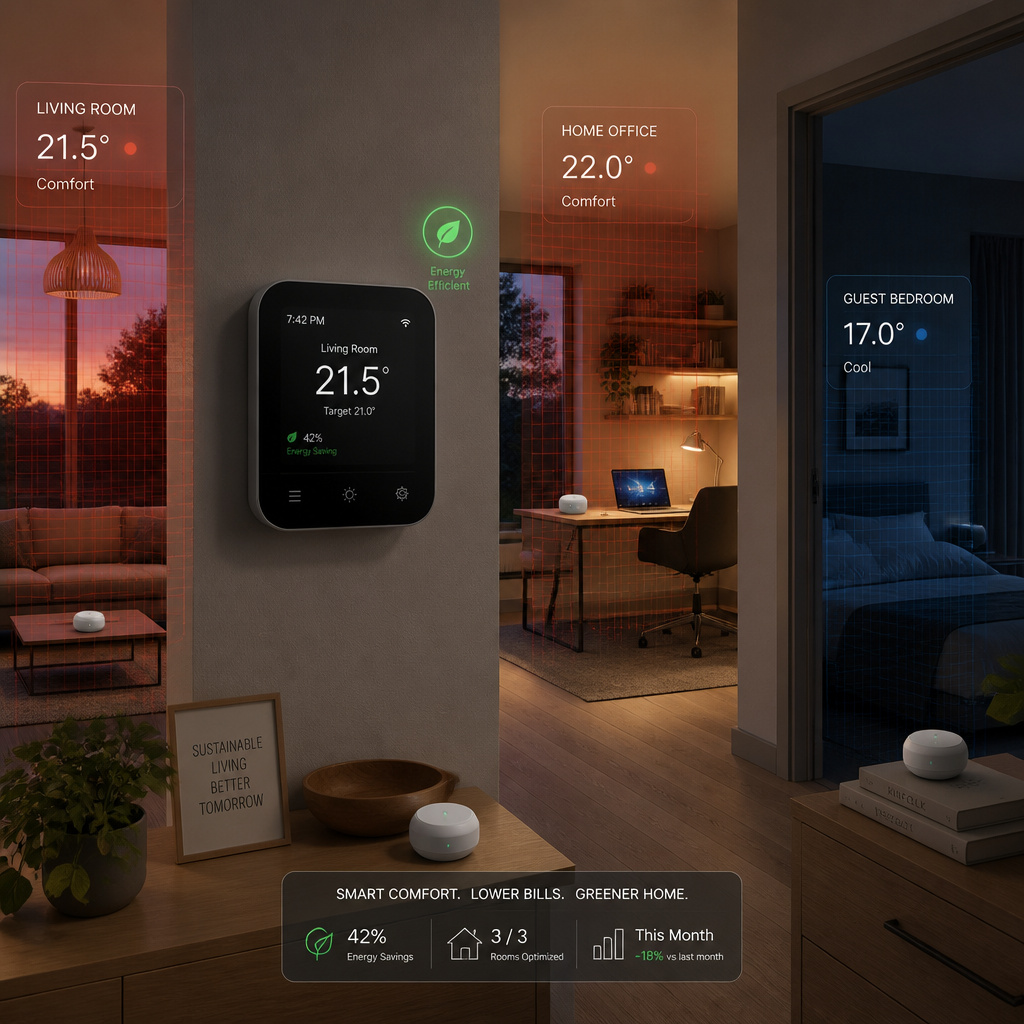
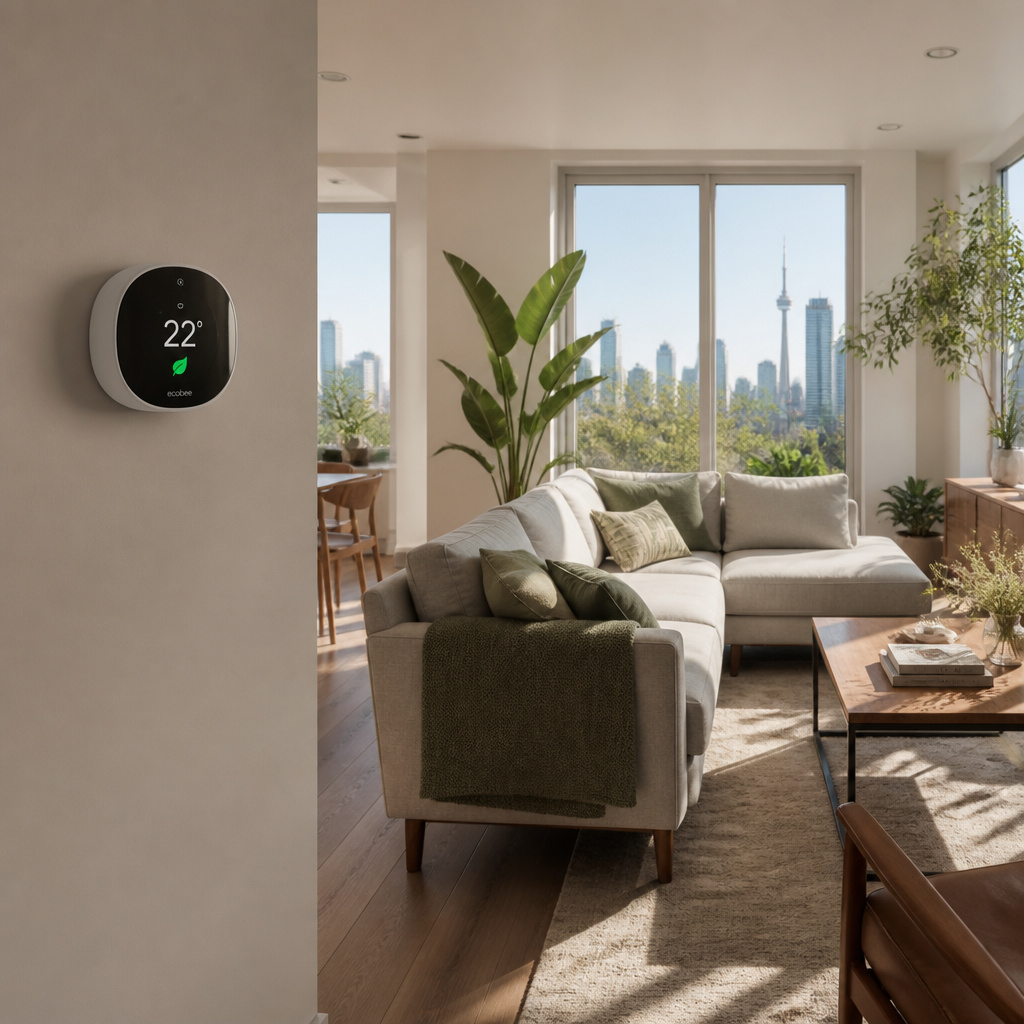
Forget the Nest you bought at Best Buy. A real smart thermostat for a custom home uses multiple sensors in each room—not just one in the hallway. My go-to is the Ecobee SmartThermostat with room sensors, but for larger homes, we install a full zoned system like the Honeywell RedLINK. Each zone learns its own schedule. The guest bedroom stays cool unless someone’s in it. The home office heats up 30 minutes before your first Zoom call. Result? Heating and cooling costs drop 15–25 percent.
LED bulbs are efficient, but they still waste energy if left on. A smart lighting system like Lutron RadioRA 3 or Control4 goes beyond timers. It uses occupancy sensors to turn off lights in empty rooms, daylight sensors to dim fixtures near windows, and geofencing to ensure every light is off when the last person leaves. In a 4,000-square-foot custom home, I’ve seen lighting energy drop by 60 percent compared to standard switches.
Toronto charges high water and wastewater rates. A smart water monitor like Moen Flo or Phyn tracks every drop in real time. It detects leaks instantly—saving you from a $20,000 basement flood—and provides data on irrigation, shower usage, and appliance efficiency. One client in Lawrence Park cut their water bill by 30 percent simply by adjusting their sprinkler schedule based on weather data from the system.
Toronto’s weather is unpredictable. A smart home that adapts to it in real time is the core of smart home green technology Toronto. Here’s how we integrate these systems in our projects.
Toronto summers are muggy. A smart system doesn’t just lower the temperature; it controls humidity. We pair variable-speed heat pumps (like Mitsubishi Hyper-Heat) with smart controllers that adjust the compressor speed based on outdoor humidity. On a 32°C day with 80 percent humidity, the system runs slower but longer, removing moisture without freezing you out. This cuts energy use by 20 percent compared to a single-speed AC.
In winter, the same system uses predictive algorithms. It reads the weather forecast and preheats the house before a cold snap arrives, avoiding the energy spike of a sudden 5:00 AM furnace kick-on. One client in Leaside reported a 28 percent reduction in gas consumption after the first winter with this setup.
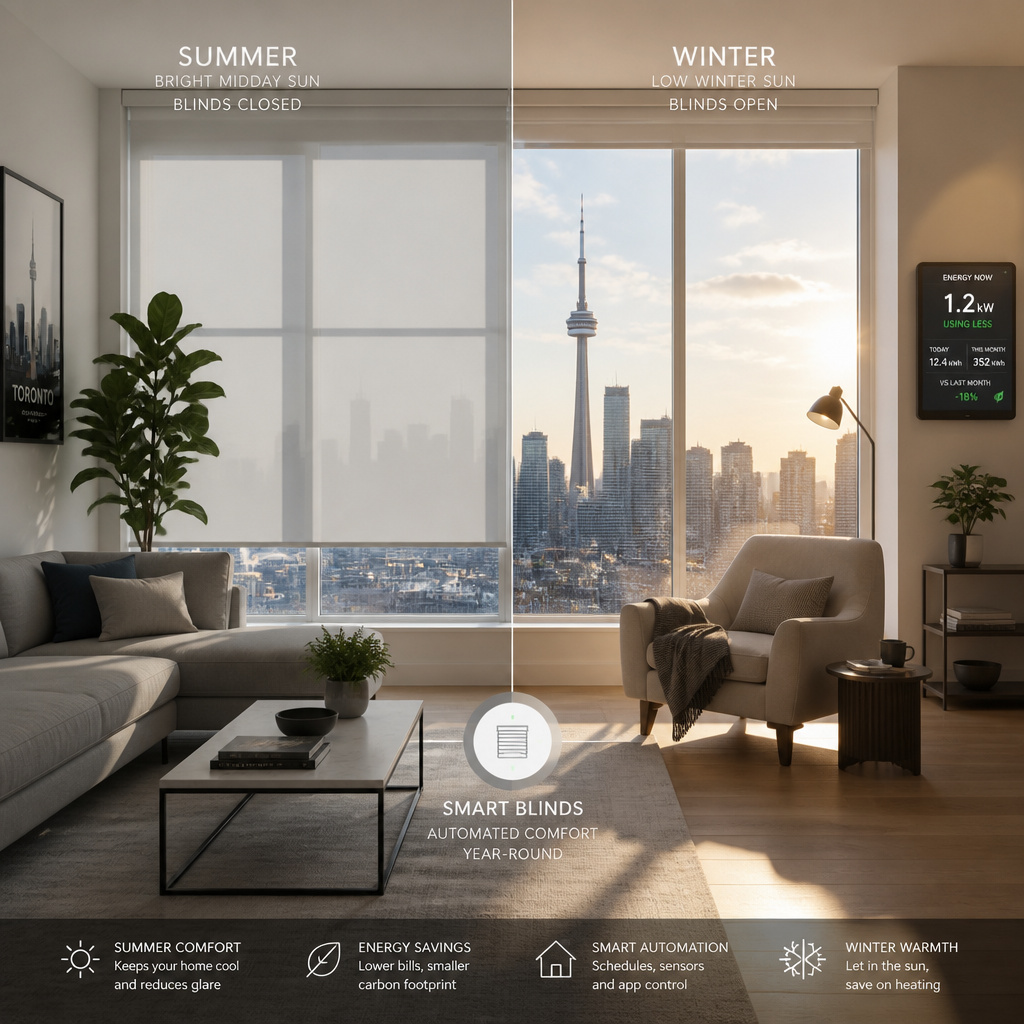
Toronto’s south-facing windows can turn a room into an oven. Smart blinds from Lutron or Somfy open and close automatically based on the sun’s angle. In summer, they close during peak heat hours, reducing cooling load by 15 percent. In winter, they open to let in passive solar heat. This is a simple, low-cost upgrade that pays for itself in three to four years.
Most Toronto homes keep water at 60°C all day—even when nobody’s using it. A smart water heater controller, like the Aquanta, learns your shower patterns and only heats water when needed. It integrates with your smart thermostat to avoid peak electricity times. I’ve seen homeowners save $200–$400 annually on water heating alone.
Solar panels are becoming common in Toronto, but they’re only half the story. The real magic happens when you pair them with smart home systems that optimize energy use.
In one of our recent projects in the Beaches, we installed a 10 kW solar array with a Tesla Powerwall battery. But we didn’t stop there. The smart home controller—a Hubitat Elevation—communicates with the solar inverter and the battery. It shifts heavy loads (like the EV charger and the pool pump) to sunny hours when solar production peaks. If a cloud passes, the system pauses the EV charger until the sun returns. This homeowner now runs their house on 90 percent solar energy from April to September.
Toronto Hydro offers time-of-use rates and a net metering program. A smart home can automatically schedule dishwashers, laundry, and EV charging for off-peak hours. That’s not convenience—that’s a 30–40 percent reduction in electricity costs, depending on your rate plan.
For luxury homes, we also integrate smart grid-ready inverters. These allow the home to sell excess power back to the grid automatically. In one project, the homeowner earned $1,200 in credits last year. That’s a tangible return on the solar investment.
Net-zero and Passive House are the gold standards for green homes. But they’re not just about insulation and airtightness. Smart technology is what makes them livable.
A Passive House requires mechanical ventilation with heat recovery (HRV/ERV). A smart controller optimizes the HRV based on indoor CO2 levels and humidity. When the house is empty, the ventilation slows down, saving fan energy. When you’re cooking, it boosts to remove smoke and odors. This keeps indoor air quality high without wasting energy.
For net-zero homes, the smart system acts as the brain. It monitors solar production, battery state, and grid demand. If the battery is full and solar is still generating, it automatically diverts power to the water heater or the EV charger. If a storm is forecast, it precharges the battery from the grid during off-peak hours. This level of optimization is impossible with manual controls.
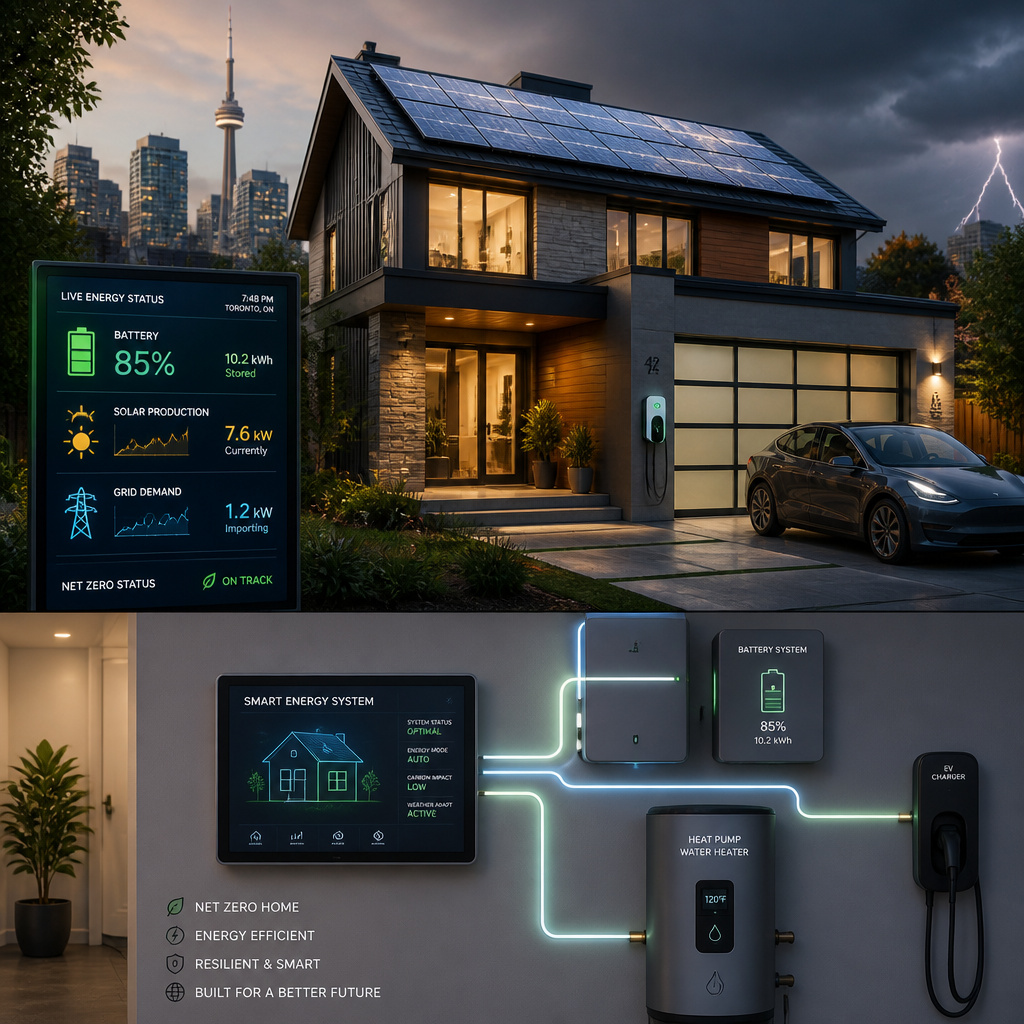
In a recent net-zero custom home in Davisville Village, we used a Savant smart system to manage all energy flows. The result? The home produced 110 percent of its annual energy needs—net-positive. The homeowner got a check from Toronto Hydro at year-end.
Not every builder understands smart home green technology Toronto. I’ve seen too many projects where the electrician installed a few smart switches and called it a day. That’s not integration—it’s decoration.
Here’s what to look for when vetting a builder for a smart-green project:
I’ll be blunt: if a builder tells you that smart technology is a “future upgrade” you can add later, walk away. Retrofitting wiring, sensors, and control panels into finished walls is expensive and messy. The time to plan is at the design stage.
Let’s talk numbers. I keep detailed records of every custom home we’ve completed. Here’s a typical scenario for a 3,500-square-foot home in Toronto with full smart home green technology Toronto integration:
But the ROI isn’t just financial. A smart-green home is quieter, more comfortable, and healthier. No drafts. No sudden temperature swings. No mystery leaks. The air quality is monitored and maintained automatically. That’s a quality-of-life upgrade that’s hard to price.
One of my clients in Forest Hill summed it up well: “I don’t think about my home’s energy anymore. The house handles it. I just live here and enjoy it.” That’s the goal.
Yes, but it’s more expensive. Wireless systems like Ecobee, Lutron Caséta, and Moen Flo can be installed without major renovation. However, you’ll miss the deep integration that a new build allows—like zoned HVAC and automated blinds wired into the wall. Budget 50–100 percent more for retrofits compared to new construction.
For a 3,000–4,000-square-foot luxury home, expect $20,000–$40,000 for a professionally installed system from Lutron, Control4, or Crestron. That includes lighting, shading, HVAC, and water management. Add $10,000–$15,000 for solar integration and battery storage.
Absolutely. Most smart systems can be programmed to run heavy loads (dishwasher, EV charger, pool pump) during off-peak hours. Some advanced systems, like the Span smart panel, can even shed loads automatically when rates spike.
Yes, and it’s highly recommended. Passive House relies on mechanical ventilation and airtightness; smart controls optimize both. Net-zero homes require real-time energy management, which only a smart system can provide. I’ve built several net-zero homes that wouldn’t have hit their targets without smart integration.
For a single-family home, the Ecobee SmartThermostat Premium is excellent because it supports room sensors and works with most HVAC systems. For zoned systems, the Honeywell RedLINK or the Mitsubishi kumo cloud are better choices. Avoid Wi-Fi-only thermostats; they lose functionality during internet outages.
If you’re planning a custom home or major renovation in Toronto, start with energy goals, not gadget lists. Decide whether you want net-zero, Passive House, or simply a 30 percent reduction in utility bills. Then work with a builder who understands smart home green technology Toronto at a systems level—not just a product level.
I’ve seen too many homeowners spend $10,000 on smart devices and still waste energy because the systems don’t talk to each other. Don’t be that person. Invest in a unified platform, plan for integration from day one, and let the technology do the heavy lifting.
Your home should be a sanctuary—not a utility bill that keeps rising. With the right approach, smart green technology delivers comfort, savings, and a lighter footprint. And in a city like Toronto, where every kilowatt-hour counts, that’s the kind of investment that pays off for decades.